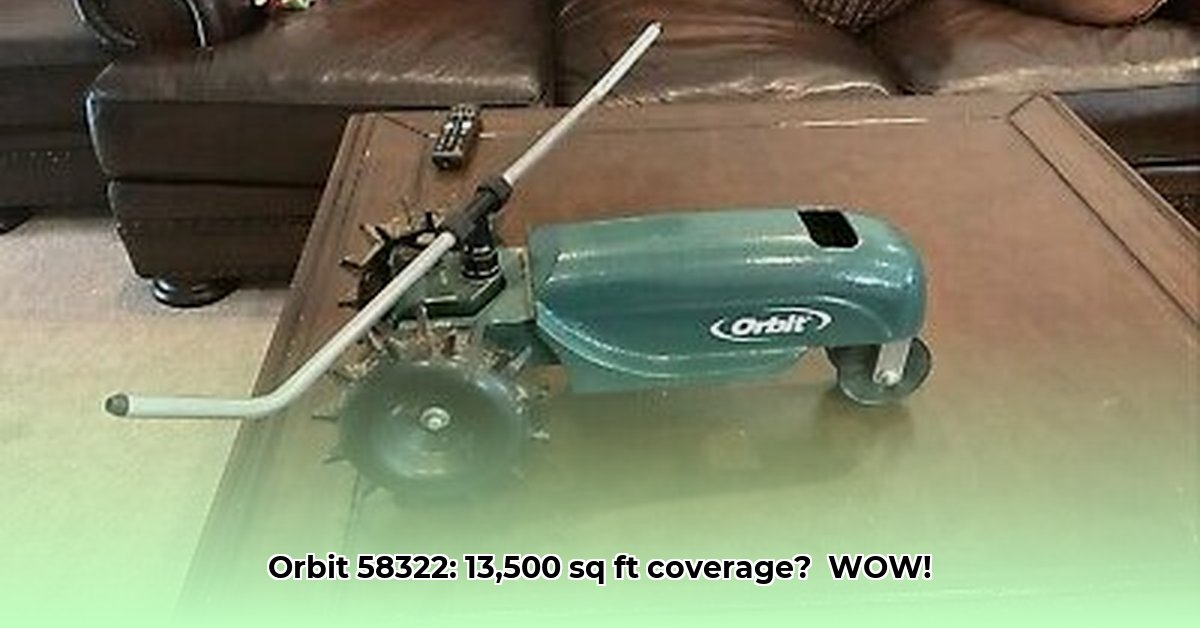
Orbit 58322 Traveling Tractor Water Sprinkler: A Detailed Review
Tired of manually watering your expansive lawn? The Orbit 58322 traveling sprinkler promises a solution, boasting coverage of up to 13,500 square feet. But does this self-propelled sprinkler deliver on its ambitious claim? This comprehensive review delves into its performance, features, and usability, helping you determine if it's the right choice for your landscaping needs.
Key Features and Specifications
The Orbit 58322 is a self-propelled sprinkler designed for large lawns. Its key features include adjustable spray distance (advertised as 15-55 feet, though real-world results vary), three speed settings (high, low, and neutral), and a durable cast iron construction. A ramp-based shutoff mechanism prevents damage at the end of its run. However, it's crucial to note its sensitivity to water pressure; optimal performance requires consistent pressure between 10 and 100 PSI. Failing to meet this requirement will significantly impact performance.
Here's a summary of its specifications:
| Feature | Specification | Notes |
|---|---|---|
| Propulsion | Self-propelled | No manual pushing required! |
| Spray Distance | 15-55 feet (reported variations exist) | Adjust based on terrain and water pressure. Consult your specific manual. |
| Speed Settings | High, Low, Neutral | Choose a setting appropriate for your lawn and water pressure. |
| Material | Cast Iron | Durable and built to withstand the elements. |
| Shutoff Mechanism | Ramp-based | Prevents damage at the end of the run. |
| Water Pressure Range | 10-100 PSI | Crucial for consistent performance; a pressure regulator may be necessary. |
| Claimed Coverage | Up to 13,500 sq ft (with 200 ft hose) | This is a maximum; actual coverage varies significantly depending on conditions. |
Performance Analysis: Reality vs. Claims
While the Orbit 58322's self-propelled nature is a significant advantage, saving you the labor of manually pushing a sprinkler, the claimed 13,500 square feet of coverage needs clarification. This figure represents the potential maximum coverage achievable, requiring a 200-foot hose and potentially multiple passes. Actual coverage will vary greatly based on water pressure, terrain, and hose configuration. Some users report significantly lower coverage in a single pass. Isn't it true that understanding this difference is vital before purchasing?
The water application rate (water applied per hour per square foot) is heavily influenced by the speed setting and water pressure. High speed provides wider coverage but less water per area; low speed delivers more water per area but covers less ground. Finding the right balance is key. Uneven terrain or obstacles further complicate coverage, requiring adjustments to hose placement and speed settings.
Pros & Cons
To help you weigh your decision, here’s a balanced look:
Pros:
- Automated Watering: Saves considerable time and effort.
- Adjustable Settings: Customizable spray distance and speed allow for tailored watering.
- Durable Construction: The cast iron build suggests long-term durability.
- Smart Shutoff: Prevents damage by automatically stopping at the end of its run.
Cons:
- Water Pressure Sensitivity: Inconsistent pressure severely impacts performance. A pressure regulator may be essential.
- Variable Water Application: Achieving consistent watering requires careful adjustment of settings.
- Misleading Coverage Claims: The advertised coverage is a maximum; actual coverage depends on several factors.
- Prop 65 Warning: Contains chemicals known to the state of California to cause cancer, birth defects, or reproductive harm. (Research carefully before purchase).
How to Use the Orbit 58322: A Step-by-Step Guide
Water Pressure Test: Measure your water pressure. It should be between 10 and 100 PSI. A pressure regulator might be necessary for inconsistent pressure.
Hose Connection: Attach a hose securely. A longer hose (up to 200 feet) will increase coverage but may reduce water pressure and increase weight.
Lawn Assessment: Identify slopes, dips, and obstacles. This will impact sprinkler movement and water distribution. Adjust hose placement accordingly.
Speed Setting Adjustment: Begin with the low speed setting to assess water distribution. Increase speed as needed, noting the impact on coverage.
Spray Pattern Adjustment: Optimize the spray pattern for even coverage. Fine-tune based on lawn layout and terrain.
Continuous Monitoring: Regularly check your lawn's moisture levels. Adjust watering schedule and settings accordingly.
Troubleshooting
- Uneven Spray: Check for clogs in spray nozzles or the filter washer. Adjust the nozzle settings and ensure sufficient water pressure.
- Sprinkler Movement Issues: Clear any debris (rocks, toys) obstructing the sprinkler's path.
- Over/Underwatering: Adjust the speed and watering duration.
Conclusion: Is the Orbit 58322 Right for You?
The Orbit 58322 can be a useful tool for watering large lawns, offering the benefit of automation and adjustable settings. However, its performance is highly dependent on consistent water pressure and a relatively even lawn. The advertised coverage is a maximum potential; actual coverage will likely be lower and influenced significantly by site conditions. Carefully consider your specific needs and lawn characteristics before purchasing. If you have a smaller, irregularly shaped lawn, or inconsistent water pressure, other options might be more suitable. If you have a large, relatively flat lawn and consistent high water pressure, the Orbit 58322 may provide the convenience and efficiency needed.